Live Dental Webinars
(Showing Next 5 Upcoming)
|
 Digital Implant Surgery: How 3D Printing changes the Guided Surgery Workflow Digital Implant Surgery: How 3D Printing changes the Guided Surgery Workflow
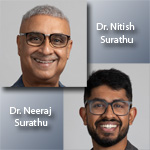
Presenter: Dr. Nitish Surathu and Dr. Neeraj Surathu
Sponsor: Rapid Shape
| Tue |
10/27/26 |
7:00 PM ET
4:00 PM PT
|
| Tue |
10/27/26 |
11:00 PM UTC
|
|
CE Credits: 1 Interactive CEU
|
|
This CE webinar explores how 3D printing is transforming the digital workflow for guided implant surgery, from treatment planning through surgical guide fabrication and implant placement. Participants will learn how to integrate CBCT and intraoral scan data, evaluate implant planning software, and develop predictable treatment plans using digital technology. The webinar will also cover the design, 3D printing, and post-processing of surgical guides and restorations, with a focus on applying guided surgery protocols to improve implant accuracy, efficiency, and patient outcomes.

|
From Inspection to Resolution 2026: Real Cases of How Dental Practices Navigated OSHA Investigations
Presenter: Dr. Karson Carpenter
Sponsor: Compliance Training Partners
| Wed |
10/28/26 |
7:00 PM ET
4:00 PM PT
|
| Wed |
10/28/26 |
11:00 PM UTC
|
|
CE Credits: 1 Interactive CEU
|
|
In this one-hour CE webinar, Dr. Karson Carpenter, president of Compliance Training Partners, will review actual OSHA inspection cases that he and his technical team have been involved with in the last 12 months. The webinar will show actual citations and how the inspection progressed from notification of inspection to onsite visit, receipt of fine, and resolution.

|
Digital Workflows for Predictable Adult Orthodontic-Restorative Treatment Implementing a Digital Ecosystem
Presenter: Dr. Melissa Shotell
Sponsor: ClearCorrect
| Thu |
10/29/26 |
7:00 PM ET
4:00 PM PT
|
| Thu |
10/29/26 |
11:00 PM UTC
|
|
CE Credits: 1 Interactive CEU
|
|
Adult patients are the largest growing population seeking orthodontic treatment. Many adult patients seek clear aligners as an esthetic alternative to traditional bracket and wire treatment. Yet many adult patients present with complex restorative treatment needs that can be complimented by orthodontic treatment for improved clinical outcomes with interdisciplinary treatment plans. Adult patients require a different patient experience and seek convenient and efficient treatment. The course will cover the basics of aligner design, materials, and mechanical advantages to understand the importance of product selection in complex adult treatment plans. The CE webinar will also explore the digital workflow and digital ecosystem for office efficiency and optimal patient experience. After the webinar, the attendee should be able to evaluate and select an aligner system for complex interdisciplinary cases, and evaluate how to implement a digital workflow for enhanced treatment planning and patient experience.

|
Smarter Smile Design: Align, Whiten, and Restore
Presenter: Dr. Nicholas Garcia
Sponsor: uLab Systems
| Mon |
11/2/26 |
7:00 PM ET
4:00 PM PT
|
| Tue |
11/3/26 |
0:00 AM UTC
|
|
CE Credits: 1 Interactive CEU
|
|
In this CE webinar, join Dr. Nicholas Garcia for a practical discussion on integrating clear aligners into everyday esthetic dentistry - particularly for patients considering whitening, veneers, or other cosmetic improvements. Using a scan-first approach, Dr. Garcia will demonstrate how he evaluates tooth position, spacing, and occlusion before developing a treatment plan. Attendees will learn how to determine when to align, when to restore, and when combining treatments may create a more conservative and predictable path to the desired esthetic outcome. The webinar will provide a straightforward framework for recognizing anterior esthetic aligner opportunities, sequencing complementary services, and confidently presenting comprehensive treatment options to patients.

|
Oral Cancer Screening: It’s More Than Grasping the Tongue
Presenter: Susan Cotten, BSDH, RDH, OMT
Sponsor: VOCO America
| Tue |
11/3/26 |
7:00 PM ET
4:00 PM PT
|
| Wed |
11/4/26 |
0:00 AM UTC
|
|
CE Credits: 1 Interactive CEU
|
|
Both dental hygienists and dentists play an important role in the early detection of oral cancer, yet there is a critical gap in screening protocols. After performing an oral cancer screening, patients often say, "No one has ever done that before." This CE webinar breaks down the components of a comprehensive visual and tactile, extraoral, and intraoral evaluation, and the signs and symptoms associated with oral and oropharyngeal cancer as an important component in screening. Using Susan’s instructional screening videos and case presentations, attendees will learn proper extraoral palpation, the importance of identifying lymphadenopathy, evaluation of the thyroid gland, and the oropharynx. ADA and ADHA oral cancer policies and coding will be reviewed.
A comprehensive oral cancer screening isn’t optional. Let’s close the gap together, elevate the standard of care in screening, calibrate dental professionals nationwide, and increase early detection. Attendees will leave inspired and with a renewed commitment to performing this life-saving evaluation – every patient, every visit.
Featured On-Demand CE Webinars
There are some dentists who boldly (or quietly) love and respect a different material, but for all the rest, who say, “Yeah, but…” there must be another way. Imagine a clinical day without recurrent decay…there is a way! At the end of this CE webinar, participants should be able to:
• Contrast ormocers from composites and glass ionomers
• Defend the evidence for sealants
• Witness caries lesion arrest
Modern dentistry is drowning in material options - flowables, bulk-fills, esthetics-first composites, universal systems, and more. For many practices, this leads to bloated inventories, training difficulties, and inconsistent outcomes across providers. In this fast-paced, practical CE webinar, we’ll explore how to cut through the noise, simplify your restorative system, and deliver efficient, predictable results using one streamlined material protocol. You’ll also be introduced to a next-generation composite platform designed to cover the full range of anterior and posterior restorations using just five cluster shades and 4mm increments, without compromising esthetics, handling, or long-term durability. Whether you’re leading a DSO or running a solo practice, this webinar will help you reduce complexity, improve efficiency, and standardize care.
Cementation is the final, decisive step that determines whether an otherwise excellent indirect restoration succeeds or fails, yet it's often where protocols become inconsistent, rushed, or based on habit rather than the specific material in hand. With the range of restorative materials in use today (zirconia, lithium disilicate and other glass-ceramics), no single cement or surface-treatment protocol applies to every case. This CE webinar takes a substrate-driven approach: matching the cement category and preparation steps to the restorative material, the clinical situation, and the amount of retention available.
Through a step-by-step walkthrough of the cementation workflow, this CE webinar covers cement selection, intaglio surface treatment, the role of primers and silane coupling agents, isolation and contamination control, try-in and cleaning, seating, and finishing. The goal is to give clinicians a clear decision framework they can apply chairside to improve predictability, reduce post-operative sensitivity and debonding, and streamline what is often an unnecessarily complicated part of restorative dentistry.
Featured Podcast Episodes
 Series: VOCO America
CE Credits: 0.5
Series: VOCO America
CE Credits: 0.5
Guest: Linda Chandler-Jacobs, BS, RDH
|
In today’s episode, we’re addressing an often-overlooked topic in dentistry—managing dental patients with Sickle Cell Disease and Sickle Cell Trait. These patients face unique challenges, and unfortunately, many are turned away from dental practices simply because their condition isn’t well understood. Our guest, Linda Chandler, RDH, s a graduate of the University of Texas School of Dental Hygiene, past President of the Southeast National Dental Hygiene Association, author, educator and voted top hygienist of the year 2012.
Series: VOCO America
CE Credits: 0.5
Guest: Dr. Jeff Horowitz
|
We'll be talking about the 3D printer itself as well as the materials that go into them. So if you thinking about incorporating 3D printing into your practice stay tuned for a very interesting episode. Our guest is Dr. Jeffrey Horowitz, a seasoned clinician and educator who is passionate about dentists seeing themselves as Oral and Facial Health Care Physicians rather than tooth mechanics.
Series: VOCO America
CE Credits: 0.5
Guest: Dr. Sam Simos
|
For decades, dentists have been trained to believe that different clinical situations demand different composite materials—one for strength in the posterior, another for esthetics in the anterior, and often several more just to manage shade. But today, material science is challenging that long-held mindset. In this episode, we’re taking a hard look at whether we’ve truly entered the era of the universal composite—a single material that does it all. Our guest is Dr. Sam Simos, a general dentist for over 30 years practicing outside of Chicago Illinois. He is a well-respected speaker, clinician and product evaluator.








 You Don’t ONLY Use Glass Ionomer, Do You?