Live Dental Webinars
(Showing Next 5 Upcoming)

|
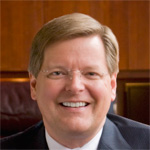
 From Inspection to Resolution 2026: Real Cases of How Dental Practices Navigated OSHA Investigations From Inspection to Resolution 2026: Real Cases of How Dental Practices Navigated OSHA Investigations
Presenter: Dr. Karson Carpenter
Sponsor: Compliance Training Partners
| Wed |
10/28/26 |
7:00 PM ET
4:00 PM PT
|
| Wed |
10/28/26 |
11:00 PM UTC
|
|
CE Credits: 1 Interactive CEU
|
|
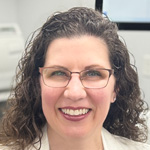
In this one-hour CE webinar, Dr. Karson Carpenter, president of Compliance Training Partners, will review actual OSHA inspection cases that he and his technical team have been involved with in the last 12 months. The webinar will show actual citations and how the inspection progressed from notification of inspection to onsite visit, receipt of fine, and resolution.
|
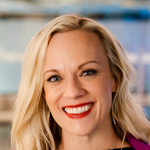
Digital Workflows for Predictable Adult Orthodontic-Restorative Treatment Implementing a Digital Ecosystem
Presenter: Dr. Melissa Shotell
Sponsor: ClearCorrect
| Thu |
10/29/26 |
7:00 PM ET
4:00 PM PT
|
| Thu |
10/29/26 |
11:00 PM UTC
|
|
CE Credits: 1 Interactive CEU
|
|
Adult patients are the largest growing population seeking orthodontic treatment. Many adult patients seek clear aligners as an esthetic alternative to traditional bracket and wire treatment. Yet many adult patients present with complex restorative treatment needs that can be complimented by orthodontic treatment for improved clinical outcomes with interdisciplinary treatment plans. Adult patients require a different patient experience and seek convenient and efficient treatment. The course will cover the basics of aligner design, materials, and mechanical advantages to understand the importance of product selection in complex adult treatment plans. The CE webinar will also explore the digital workflow and digital ecosystem for office efficiency and optimal patient experience. After the webinar, the attendee should be able to evaluate and select an aligner system for complex interdisciplinary cases, and evaluate how to implement a digital workflow for enhanced treatment planning and patient experience.

|
Smarter Smile Design: Align, Whiten, and Restore
Presenter: Dr. Nicholas Garcia
Sponsor: uLab Systems
| Mon |
11/2/26 |
7:00 PM ET
4:00 PM PT
|
| Tue |
11/3/26 |
0:00 AM UTC
|
|
CE Credits: 1 Interactive CEU
|
|
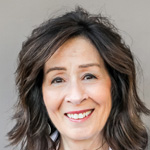
In this CE webinar, join Dr. Nicholas Garcia for a practical discussion on integrating clear aligners into everyday esthetic dentistry - particularly for patients considering whitening, veneers, or other cosmetic improvements. Using a scan-first approach, Dr. Garcia will demonstrate how he evaluates tooth position, spacing, and occlusion before developing a treatment plan. Attendees will learn how to determine when to align, when to restore, and when combining treatments may create a more conservative and predictable path to the desired esthetic outcome. The webinar will provide a straightforward framework for recognizing anterior esthetic aligner opportunities, sequencing complementary services, and confidently presenting comprehensive treatment options to patients.
|
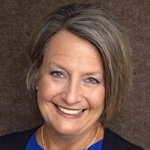
Oral Cancer Screening: It’s More Than Grasping the Tongue
Presenter: Susan Cotten, BSDH, RDH, OMT
Sponsor: VOCO America
| Tue |
11/3/26 |
7:00 PM ET
4:00 PM PT
|
| Wed |
11/4/26 |
0:00 AM UTC
|
|
CE Credits: 1 Interactive CEU
|
|
Both dental hygienists and dentists play an important role in the early detection of oral cancer, yet there is a critical gap in screening protocols. After performing an oral cancer screening, patients often say, "No one has ever done that before." This CE webinar breaks down the components of a comprehensive visual and tactile, extraoral, and intraoral evaluation, and the signs and symptoms associated with oral and oropharyngeal cancer as an important component in screening. Using Susan’s instructional screening videos and case presentations, attendees will learn proper extraoral palpation, the importance of identifying lymphadenopathy, evaluation of the thyroid gland, and the oropharynx. ADA and ADHA oral cancer policies and coding will be reviewed.
A comprehensive oral cancer screening isn’t optional. Let’s close the gap together, elevate the standard of care in screening, calibrate dental professionals nationwide, and increase early detection. Attendees will leave inspired and with a renewed commitment to performing this life-saving evaluation – every patient, every visit.

|
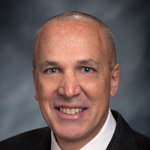
Composite Secrets They Never Taught You In Dental School (and Still Don’t)
Presenter: Dr. Michael Morgan
Sponsor: Bisco
| Wed |
11/4/26 |
7:00 PM ET
4:00 PM PT
|
| Thu |
11/5/26 |
0:00 AM UTC
|
|
CE Credits: 1 Interactive CEU
|
|
Direct resin has become one of the restorative materials of choice in both general and high-end esthetic practices. The explosion of demand by patients for esthetic dental services has led to an array of new dental products and treatments for practitioners to choose from. A new generation of composite resins can be utilized with a simplified protocol to create amazing anterior and posterior restorations that rival the beauty and strength of porcelain.
Featured On-Demand CE Webinars
73 million Americans make up the Baby Boomer generation, and they will all be over the age of 65 by the year 2030. Sometimes it just takes a little more time, or a little bit more space to care for an aging patient population. Other times, a whole host of oral issues pop up at once and it can be overwhelming for the provider and the caregiving team. This CE webinar will cover treating the aged dentition, how to talk to patients & their loved ones about chronic oral disease, armamentarium to make visits smoother and preventative & restorative products to keep on hand for reliable treatment outcomes.
This CE webinar is designed to understand and illustrate the technique in creating beautiful anterior and posterior chair side provisional (prototype) restorations efficiently, predictably, and inexpensively utilizing bisacrylic resin. The variations of bisacrylic resins and which one achieves beautiful esthetics, greater durability and accuracy for your provisional restorations. In addition, there will be a discussion about the indications and uses of flowable resin as well as the temporary cement options for luting in one’s provisional restorations.
This CE webinar will discuss which criteria needs to be met such as optimal primary stability, correct 3D positioning, etc., during immediate implant placement in the anterior region. Additionally, the Dr. Rocha will discuss the creation of an immediate provisional restoration on the implant while respecting biological principles leading to preservation of the papillae, gingival volume, and recession prevention. A step-by-step case will be presented showcasing the use of a stratified composite resin for both the provisional restoration as well as the infrastructure.
Featured Podcast Episodes
 Series: VOCO America
CE Credits: 0.5
Series: VOCO America
CE Credits: 0.5
Guest: Dr. Howard Glazer
|
Today we'll be talking to Dr. Howard Glazer. a knowledgeable, candid and entertaining dentist who has been practicing for 50 years! We'll touch on the high points of provisional materials, tissue retraction, lasers, handpieces, curing lights, and patient management tools. Dr. Howard Glazer is a Fellow and past president of the Academy of General Dentistry, an internationally known clinician, educator and author He publishes a bi-monthly column in Dental Economics entitled “I Have It…You Need It!” where he shares his opinion and experiences on materials, products and techniques that will make your day easier, more productive and rewarding. He maintains a general practice in Fort Lee, NJ.
Series: VOCO America
CE Credits: 0.5
Guest: Dr. Susan McMahon
|
Our guest, Dr. Susan McMahon, has mastered how to leverage 3D printing technology in her practice. She’ll share how 3D printing has made her provisionals exceptional and how it has transformed her indirect restorative workflow. Dr. McMahon has been honored as a Top U.S. Dentist more than 20 times and has been voted by her peers as a Top Pittsburgh Dentist every year for over two decades.
 Series: Bisco
CE Credits: 0.5
Series: Bisco
CE Credits: 0.5
Guest: Dr. Sara Kuckhoff
|
Our guest today, Dr. Sara Kuckhoff, is a general dentist from Michigan who has been out of dental school for six years. She has fully embraced the mindset of continuous growth. She’ll share her journey, how she pursues her passions, and why that pursuit has helped her not only enjoy her profession but also feel more confident and fulfilled as both a person and a dentist. Whether you’re a new dentist just starting or a seasoned professional looking for fresh inspiration, this episode will remind you why setting goals, staying engaged, and keeping an open mind to learning can make all the difference in your career.






 Caring for the "Oldie, Classic, and Vintage" Dentition